
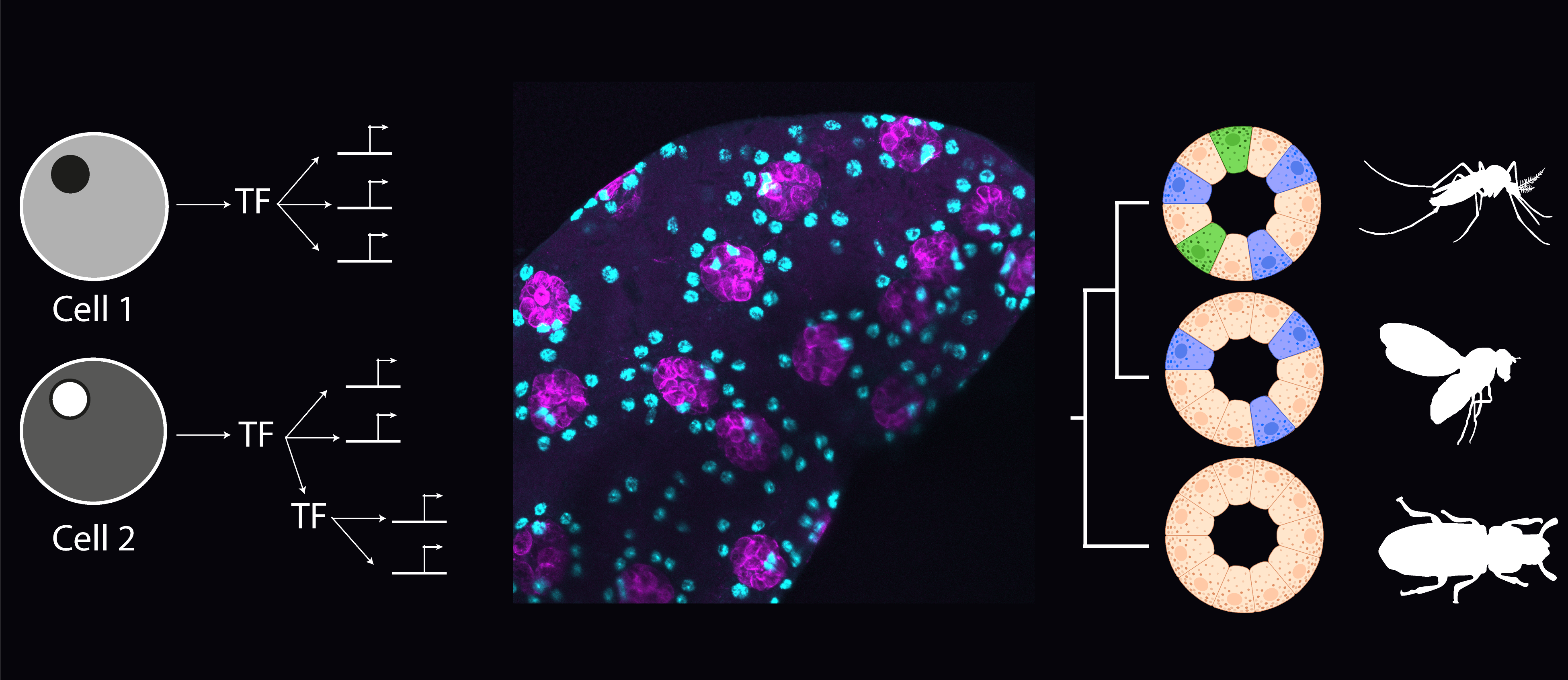
Work in our lab seeks to understand how the functions and identities of animal organs and cell types are encoded in the genome, as well as the genetic mechanisms through which these traits evolve. We employ a comparative, multi-species approach, working largely in insects and with a particular focus on the Drosophilidae family. We are especially interested in ‘evolutionary innovations’ and rapidly evolving organ classes, such as sensory organs and the prostate-like secretory tissues of the reproductive system. Our work makes use of a wide-range of computational and experimental approaches, including gene regulatory network reconstruction, comparative genomics, genome-editing, and single-cell ‘omics.
—

–
–
 Ben R. Hopkins